Thursday, July 29, 2010

Watergy

The Energy-Water NexusImage by Argonne National Laboratory via Flickr

I recently came across this free spreadsheet tool (and pdf manual) called Watergy when navigating the Federal Energy Management Program website. Since I love to see numbers I had to share it here. More interestingly, it is always useful to see behind the scenes how these tools work to make estimates that can inform decisions.

Be sure to check this tool out if you are interested in understanding the energy and water use relationship that exists in the operation of buildings. Basically, water savings in places like faucets, sinks and showers can lead to reduced energy use since less water needs to be heated and less energy is required to convey it and treat it. Some places like islands use even more energy because their potable water is usually sourced from desalination plants which use a lot of energy.
Enhanced by Zemanta

Monday, July 26, 2010

CoV Pecha-Kucha Green Buildings

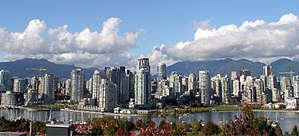
View on Vancouver on October 1, 2005Image via Wikipedia

I will now take this opportunity to give my two cents regarding Vancouver's attempt to be the Greenest City by 2020, particularly after watching David Ramslie's talk at the Pecha-Kucha event.

First, I found Mr. Ramslie's vision to be very innovative and one of the more enjoyable ones at the event. I had never heard about the analogy of the transition we are living in the green building movement to the idea of computers being transformed by the internet. I am confident he is right: the future of green buildings will be regional based and heavily aided by buildings communicating with each other.

BurnabyImage via Wikipedia

However, as much as we like to hear the statement that Vancouver has the greenest building code in North America, I have my doubts. In fact, I would have appreciated if the speakers had stated exactly why they say this is so. If we are talking about promoting LEED buildings, then yes, Vancouver is doing plenty, but there are still some things that must change if Vancouver will be the greenest city.

Vancouver should not be a island of green in a sea of sprawl. Therefore, Vancouver must get its suburbs on board ASAP, North Vancouver, Surrey, Burnaby, ... It is assumed from the wording of the city vision that a "one planet footprint" is being used as a measuring stick. If so, I assume that they are talking about the Ecological Footprint tool, and we must begin to discuss the strengths and weaknesses of this assessment tool. Being a "one planet footprint" city is hard for a port city that imports resources from all over the world.

The problem of housing affordability needs to be addressed and discussed. The city keeps saying that the more condos that spring up, the lower rents should theoretically be. By now, we understand that this is not working. Bing Thom Architects has published articles calling for more family friendly buildings (i.e. less one bedroom and studios). If we want Vancouver to be green, we need to retain people here and have them build a life they can afford.

We also know the benefits of mixed-use buildings but what policies are in effect to promote this, particularly in retrofit situations? What is the laneway housing equivalent for promoting mixed use livability and not mere densification?

New funding mechanisms should be developed to support lowest life cycle costs which often have a higher initial cost. Developers are here to make money, and with the exception of a handful, don't care about making their buildings energy efficient. They will cut corners because they know people will buy and be fooled by the fancy looking but poorly built residences they purchase. This is something that has to be mandated through policy, and this is why other neighboring cities must be in the loop, so that the whole region can truly prosper.

Overall, we need life cycle thinking in how the built environment is managed. Reduced energy use during building operation is very important, but it is not everything. The regional aspects are more important. Green buildings alone won't do it. We need community building, neighborhood flourishing and citizen empowerment.

Satellite photo of Vancouver region, with Burr...Image via Wikipedia

I feel that the city is taking a lot of reasonably good decisions (perhaps even bold) in the right direction, but it will take more to reach the targets the city has set. If we are living responsibly, I think the processed satellite image shown will look more green and less like a purplish virulent disease.

Nonetheless, the fact that we are talking about our city for the next couple of decades is amazing and encouraging in a world where politicians are primarily worried about the next election.

Remember to keep an eye on the city's public forum where people are posting and voting for their favorite ideas on how to reach Vancouver's goal.


Enhanced by Zemanta

Saturday, July 24, 2010

Ubuntu 10.04 LTS


Continuing with the topic of productivity tools, I have recently installed Ubuntu 10.04 LTS on an old computer I was considering trashing soon (not anymore). In case you are not familiar, Ubuntu is a free and the most popular distribution of the Linux operating system (a Microsoft Windows replacement essentially). However, if you ask them they will tell you that Ubuntu is much more than this, because on top of that, they have community.

I actually used to work a little in Ubuntu back in the day when I worked as a web designer, and although I liked it, I wouldn't have considered switching over entirely. I recall pdfs would sometimes look very different (font and transparency issues?), flash on webpages did not usually work properly and things like mp3s would not work without some sort of guru Linux expertise in using their obscure Terminal (which used to be also needed to set up your internet).

But the software has come a long ways since then. I was extremely surprised to find how easy it was to install, although I did have to do a few work arounds to get it going. All the issues I had previously mentioned from my past experiences were no longer existent. Ubuntu fulfills pretty much 95% of my needs. This leads me to believe that this latest release and perhaps the following (scheduled for 10/10/2010) are pretty much the tipping point to have a growing mass of Ubuntu users.
  • Free!
  • Super fast (note that this is an old computer that took like five minutes to boot up Windows XP)
  • Stable! (Ok, it does rarely crash, but hey it boots up so fast it's not an issue)
  • You can update ALL your software in one click!
  • No antiviruses/malware scanners!
The only thing that is in my opinion an absolute requirement is that the computer you are planning to use has an internet connection. This is how I downloaded things like Dropbox and drivers to use my Lexmark all in one printer/scanner.

From an academic engineering perspective, there are a number of things that are still missing. There are a couple of FEA programs, but other than that very little. The engineering software repository doesn't have much for the Engineering category. Below I list some software that I thinkI have found useful and hope you will comment if you know of other software.

  • Scilab - The Mathwork's Matlab open-source equivalent developed in Europe. Commands and certain tools are different, but essentially you can still perform a ton of operations on large matrices, programming. Other useful things like programming and reading csv or xls files are also supported. The fancy interface and report generation from Matlab is unfortunately not available, yet.
  • Wine - The gateway program will let you install and run software meant for Windows. I have yet to experiment with this one since most of the Building Information Modeling software, LCA software (Athena, Simapro), Autodesk Revit, AutoCAD, Robot, RISA, eTabs and the list goes on.
So to summarize, I think in a couple of years there is likely to be a mass transition of users that use primarily Ubuntu. As this happens, more and more software will be available until Wine is no longer needed, and at last we won't have to waste time, energy and resources on "protecting" our computers from viruses, malware and whatnot. If you know programmers, tell them to start writing in stuff like Qt, because the future is full of operating system options, and those most successful will let their software flourish in multiple platforms or online (like Google).
Enhanced by Zemanta

Saturday, July 17, 2010

Life is busy, productivity tools

Life is busy and green buildings are not as green as they seem. The summer in Vancouver is finally full of sunshine, and life is hectic, but I have recently found a couple of tools that are keeping me on track. I do not receive any money from promoting these but I did want to share in case anyone out there is interested.

Tag2Find

This tool should be a part of the Windows operating system. Basically, if you use Google Mail you are likely to be familiar with tags. They are like the next generation of folders. As we all know, categorizing files to find them later can be problematic. I have a ton of pdfs, some are dissertations, journal articles, power point presentations, and it is very hard to create a folder structure. Tags are the answer to this problem. This software is free, and I have found it so useful to help me organize and keep track of my files. Anyways, take a look if you think this might help you.

Dropbox

Dropbox is another tool that is so essential. Basically, the free service offers you a couple of gigs for storing your files. By downloading and installing the software, you are able to synchronize files along your computers through your Dropbox folder. It is like an online folder, so that if you are working at home, at work, with your other laptop, you can have easy convenient access to your files. The files are kept synchronized with no work from your part. Also, this stores my thesis document which doubles up as a secure backup location for me. If you pay, you can actually get more space.

That's it for now! Time to go to the community garden. Hope you all find these tools as helpful as I have.

Wednesday, July 7, 2010

Pecha Kucha Vancouver

This event took place a few weeks back. Although I did not attend, I was surprised to discover that the talks have been posted online. The one I'd like to share today by David Ramslie on green buildings. I will offer some commentary in the next few days. What do you think?